
The world of virtual assistant services has transformed the way businesses manage their administrative needs. Understanding the costs associated with these services is critical for making informed decisions. This guide will delve into the various hourly rates and pricing models that virtual assistants offer, equipping you with knowledge on what affects these costs. With many companies outsourcing administrative tasks, grasping the financial implications enables businesses to plan better and utilize resources effectively. We will explore the standard rates, key factors influencing costs, and the different pricing models available in the virtual assistant landscape.
Hourly Rates
Hourly rates for virtual assistant services typically vary based on experience and task complexity. The average standard hourly rate for virtual assistant services is between £15.00 and £50.00, depending on the region and specific services. Understanding these rates helps businesses gauge their budget and make strategic decisions when hiring virtual assistants.
Pricing Structures
When considering the cost of hiring a virtual assistant, it’s essential to understand the various pricing structures available. Common examples include hourly rate packages that charge a set amount for each hour worked, as well as bundled service packages that offer a lower rate when purchasing multiple hours in advance.
Pricing Models

Virtual assistants provide several pricing models to accommodate different business needs. These include hourly rates and bundled packages, where costs per hour decrease with the purchase of larger packages. For instance, a 10-hour package is commonly priced at around £150.00 to £300.00, while a 20-hour package is generally available for approximately £250.00 to £500.00, with higher package options reflecting similar discounts. These models allow businesses to choose a structure that best aligns with their operational needs while benefiting from potential savings.
The Benefits of Bundled Packages
Bundled packages not only provide cost savings but also give flexibility in how hours are utilized. Businesses can reserve hours for project-based work, ensuring they have access to assistance when required. This model is particularly beneficial for businesses that experience fluctuating workloads.
Discounted Rates for Larger Packages
As the number of purchased hours increases, the rate per hour generally decreases. Providers often incentivize businesses to opt for larger packages by offering discounts, thus promoting commitment and efficiency. Organizations can capitalize on these offers to optimize their budgets.
Key Factors Influencing Costs
Several key factors contribute to the variation in virtual assistant costs. From the nature of the tasks to the required duration of engagement, these elements can significantly influence pricing. Notably, more specialized tasks often incur higher rates due to the skill set required.
Service Complexity
The complexity of the tasks assigned to the virtual assistant plays a crucial role in determining costs. More intricate tasks such as project management or specialized data analytics can warrant higher hourly rates compared to basic administrative functions.
Task Volume and Duration
The overall volume of work assigned and the length of engagement can impact pricing structures as well. Businesses may find greater value in longer engagements, as many providers offer reduced rates for extended contracts, encouraging loyalty and long-term partnerships.
Experience and Skill Level
Experience levels can also affect the cost of virtual assistant services. Highly experienced assistants often command higher rates, reflecting the added value and expertise they bring to their roles. Moreover, those with specialized skills or certifications may justify premium pricing based on their unique qualifications.
What Are the Key Factors Influencing Virtual Assistant Pricing?
In addition to service complexity and experience, several other factors influence virtual assistant pricing. Key considerations include:
- Type of Services: Different assistants may specialize in various administrative areas, such as HR assistance or HR assistance or data entry services, leading to varying costs.
- Contract Terms: Terms of engagement, whether short-term or long-term, can impact pricing negotiations and agreements.
- Market Demand: Fluctuations in demand for virtual assistant services can also lead to pricing adjustments based on availability and competition.
How Do Task Complexity and Scope Affect Virtual Assistant Costs?
Complex tasks typically command higher fees due to the expertise and time required to execute them effectively. Additionally, a broader scope of work often results in a higher price point, as more resources and time are allocated to meet client expectations.
Examples of Complex Tasks
Complex tasks that may incur additional costs include in-depth market research, advanced data analysis, and comprehensive project management. These tasks necessitate a higher level of skill and involve more time commitment.
Managing Costs Through Task Division
To manage costs effectively, businesses can consider dividing extensive or complex tasks into smaller, manageable segments. This effort can not only optimize workloads but also facilitate budgeting and resource allocation.
What Role Does Experience and Specialization Play in Pricing Models?
Experience is a pivotal element in determining virtual assistant pricing. More seasoned professionals often bring invaluable insights and efficiency, which can justify higher rates. Similarly, specialization in fields like HR or finance may provide added value, leading to increased demand and pricing.
Benefits of Experienced Virtual Assistants
Engaging experienced virtual assistants can bring numerous advantages, including quicker turnaround times, enhanced productivity, and strategic insights that less experienced assistants may lack. Businesses can benefit greatly from this wealth of experience in administrative support.
Which Virtual Assistant Pricing Models Are Commonly Used in Administrative Support Services?
Virtual assistants utilize various pricing models, including:
- Hourly Rates: Straightforward billing based on time worked.
- Retainer Agreements: Fixed monthly payments for guaranteed availability.
- Project-Based Pricing: Fixed fees based on project scope rather than time.
These models cater to diverse client preferences and financial strategies, making virtual assistant services adaptable for various business sizes and needs.
Selecting the Appropriate Pricing Model
Choosing the right pricing model requires assessing business operations and determining which structure aligns with workload requirements and budget constraints. This process can lead to more effective resource allocation and overall satisfaction with virtual assistant services.
Commonly Used Virtual Assistant Pricing Models
Pricing models vary widely among virtual assistant services. Understanding these differences can aid businesses in selecting a model that offers the best combination of pricing structure and value.
This table highlights the cost efficiency of purchasing bundled hours, demonstrating significant savings compared to standard hourly rates.
How Do Hourly, Retainer, and Project-Based Pricing Compare?
The three pricing models offer different advantages depending on a business’s needs. Each model has distinct pros and cons:
- Hourly Pricing: Provides flexibility but can lead to unpredictable costs.
- Retainer Agreements: Ensure consistent support but may involve higher fixed costs.
- Project-Based Pricing: Creates clarity in budgets, yet may lack flexibility for changing workloads.
Evaluating Each Model
When evaluating these models, businesses must consider their workload patterns and financial flexibility. The decisions should align with operational demands and desired outcomes for administrative support.
What Is the Growing Trend in Hybrid Pricing Models for Virtual Assistants?
Hybrid pricing models have started to gain traction in the virtual assistant landscape. These models combine traditional hourly rates with package deals, allowing clients to enjoy the benefits of both structures.
Benefits of Hybrid Models
Hybrid models provide businesses with flexibility and cost management. This structure can be advantageous for tasks that require both routine assistance and project-based work, maximizing the utility of the investment.
How Can Businesses Obtain an Accurate Bespoke Virtual Assistant Quotation?
For businesses looking to secure tailored virtual assistant services, obtaining an accurate quotation involves a clear understanding of needs and requirements. It is crucial for potential clients to articulate their requirements to ensure providers can deliver appropriate pricing.
Process for Obtaining Quotations
- Define Scope: Clearly outline tasks and expected outcomes.
- Contact Providers: Reach out to potential virtual assistant services with detailed requirements.
- Follow Up: Confirm details and ensure understanding of expectations to receive an accurate quote.
What Is the Step-by-Step Process to Request a Tailored Virtual Assistant Quote?
Requesting a tailored quote can streamline the hiring process for businesses seeking virtual assistance. The step-by-step procedure includes:
- Specification of Needs: Clearly describe required tasks and responsibilities.
- Communication: Identifying the right provider and effectively communicating needs.
- Comparison of Offers: Evaluating quotes to determine the best fit for operational needs.
Why Is Pricing Flexibility Important in Virtual Assistant Services?
Pricing flexibility is crucial in the realm of virtual assistant services, allowing businesses to adapt to fluctuating workloads and changing operational demands. It enables effective budgeting and resource allocation, ensuring that businesses remain productive without overspending.
Tailoring Services to Business Needs
Flexible pricing models enable businesses to customize service arrangements based on immediate needs, allowing for adjustments in scope and scale of work without incurring unforeseen costs.
What Is the Cost Comparison Between In-House and Virtual Administrative Support?
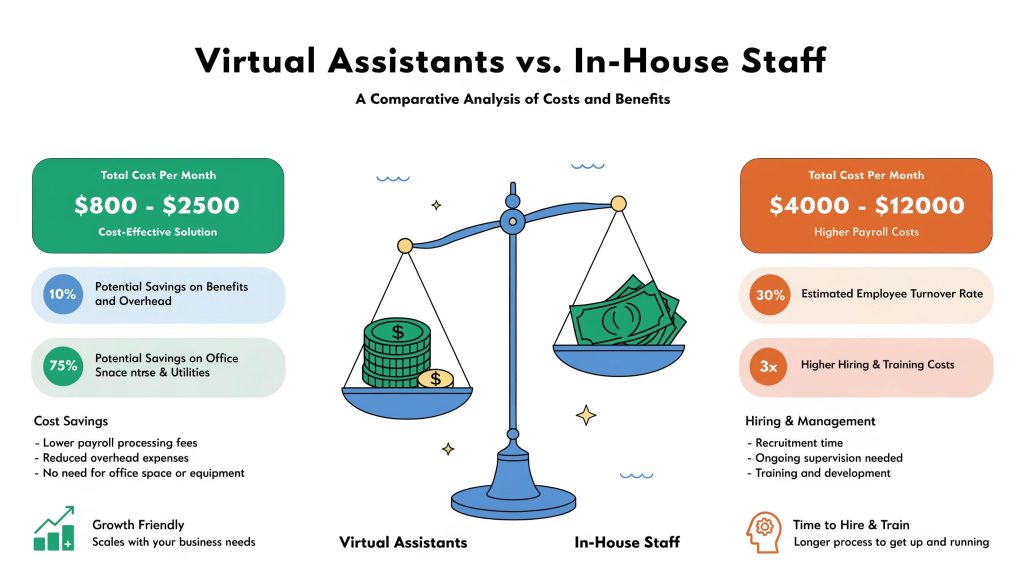
When weighing the costs of in-house versus virtual administrative support, businesses can often find that virtual assistants provide significant savings. Engaging a virtual assistant typically incurs fewer overhead costs compared to employing full-time in-house staff.
Overall Cost Advantages
The primary cost advantages of utilizing virtual assistants over traditional in-house staff include reduced expenses for benefits, training, and office space. This efficiency can lead to increased profitability and operational productivity.
How Do Virtual Assistant Rates Compare with In-House Employee Expenses?
Virtual assistant rates often present a more cost-effective solution compared to in-house expenses. Traditional employee costs encompass salaries, benefits, and long-term commitments that can significantly raise operational costs.
Analyzing Financial Implications
By hiring virtual assistants, businesses can solely pay for the hours worked while enjoying the benefits of professional support tailored to their specific needs. This arrangement can lead to substantial financial savings over time.
What Are the Additional Benefits of Outsourcing Administrative Tasks Remotely?
Outsourcing administrative tasks to virtual assistants can yield several additional advantages. Key benefits include:
- Increased Productivity: Freeing up in-house staff to focus on critical tasks enhances overall productivity.
- Scalability: Businesses can quickly adjust workloads and resources in response to demand fluctuations.
- Specialized Skills: Accessing specialized expertise allows companies to improve the quality of work without the need for additional training.
Outsourcing administrative functions creates operational efficiencies that drive business growth and enhance competitive positioning in the marketplace.